Social media platforms have become the primary battleground for audience attention, and video is the weapon of choice. But creating videos that truly perform on social media requires far more than simply uploading footage and hoping for the best. Each platform has its own rules, its own audience behaviours, and its own algorithmic preferences. Understanding these nuances is the difference between content that goes viral and content that disappears without a trace. This guide covers everything you need to know about creating social media friendly videos that engage, convert, and grow your brand.
Platform-Specific Requirements: One Size Does Not Fit All
The biggest mistake brands make with social media video is treating every platform the same. What works on YouTube will fail on TikTok. What thrives on LinkedIn will underperform on Instagram. Each platform demands a tailored approach.
YouTube remains the king of long-form video content. Optimal video length ranges from 8 to 15 minutes for standard content, with tutorials and educational material performing well at even longer durations. The standard aspect ratio is 16:9 (landscape), and thumbnail quality is crucial for click-through rates. YouTube rewards watch time above all else, so content must maintain engagement throughout.
Instagram offers multiple video formats: Reels (up to 90 seconds, 9:16 vertical), Stories (15-second segments, 9:16), and feed posts (up to 60 minutes, 1:1 or 4:5). Reels currently receive the strongest algorithmic push, making them essential for organic reach. Visual quality and aesthetic consistency with your feed are paramount on this platform.
TikTok thrives on authenticity, trends, and rapid pacing. Videos between 15 and 60 seconds perform best, shot in 9:16 vertical format. The algorithm favours content that generates immediate engagement — likes, comments, shares, and rewatches. Unlike other platforms, polished production can actually work against you here; audiences prefer relatable, energetic content.
LinkedIn is the platform for professional and B2B video content. Videos between 30 seconds and 5 minutes work well, with both 16:9 and 1:1 formats performing effectively. Thought leadership, industry insights, behind-the-scenes content, and professional achievements resonate strongly with LinkedIn's audience.
The First Three Seconds: Your Make-or-Break Moment
On social media, you do not have the luxury of a slow build. Research shows that viewers decide whether to continue watching within the first three seconds. If you fail to capture attention immediately, your content is lost to the infinite scroll regardless of how brilliant the rest of it may be.
Effective hook strategies include:
- Bold opening statements: Lead with your most surprising, controversial, or valuable insight. "Most businesses waste 80% of their video marketing budget" is far more compelling than "Today we are going to talk about video marketing."
- Visual pattern interrupts: Quick cuts, unexpected visuals, text overlays, or dynamic movement in the first frame stop thumbs mid-scroll.
- Direct questions: Asking a question that your target audience is already thinking about creates an immediate need to hear the answer.
- Tease the payoff: Show a glimpse of the end result or promise specific value upfront. "By the end of this video, you will know exactly how to double your engagement rate."
The key principle is this: front-load your value. Do not save the best for last — social media audiences will never get there unless you earn their attention from the very first frame.
Engagement Techniques and Accessibility
Creating a video that people watch is only half the battle. Social media algorithms reward engagement — comments, shares, saves, and replies — so your content must actively encourage interaction.
Ask direct questions throughout your video. Use calls to action such as "Comment below if you agree" or "Save this for later." Create content that viewers feel compelled to share with colleagues or friends. Controversial takes (when genuine) generate discussion. Practical tips generate saves. Emotional stories generate shares.
Captions and accessibility are no longer optional — they are essential. Studies consistently show that 85% of social media video is watched without sound. If your content relies solely on audio, you are invisible to the vast majority of your potential audience. Always add captions or subtitles to your videos. Beyond the silent-scrolling audience, captions make your content accessible to deaf and hard-of-hearing viewers, expanding your reach while demonstrating inclusivity.
Use large, readable text overlays to reinforce key points visually. Ensure sufficient contrast between text and background. And always check that your captions are accurate — auto-generated subtitles frequently contain errors that undermine your professionalism.
Repurposing Long-Form Content Into Social Clips
One of the most efficient strategies for maintaining a consistent social media presence is repurposing long-form content into multiple shorter clips. A single 30-minute podcast episode or webinar can yield ten or more social media videos, each highlighting a different key moment, insight, or quotable statement.
When planning long-form content, think about repurposing from the outset. Structure your recordings around distinct topics or segments that can stand alone as individual clips. Ensure your speaker delivers concise, impactful statements that work out of context. Record in high resolution so that cropping from 16:9 to 9:16 does not sacrifice quality.
The repurposing workflow should include: identifying the strongest moments from your long-form content, editing them into standalone clips with hooks and context, reformatting for each platform's aspect ratio requirements, adding platform-appropriate captions and graphics, and scheduling distribution across your channels.
This approach multiplies the return on every piece of content you produce and ensures your social media channels remain active without requiring constant new production.
Professional Quality vs DIY: Finding the Right Balance
The debate between professional and DIY video production is nuanced. Authenticity matters on social media, and overly polished content can feel disconnected on platforms like TikTok. However, there is a significant difference between intentionally casual content and content that simply looks bad due to poor lighting, muffled audio, or shaky footage.
The ideal approach combines professional production values with authentic presentation. This means recording in a properly lit, acoustically treated environment with quality equipment, but delivering your content in a natural, conversational style. The technical quality should be invisible — viewers should notice your message, not your production setup.
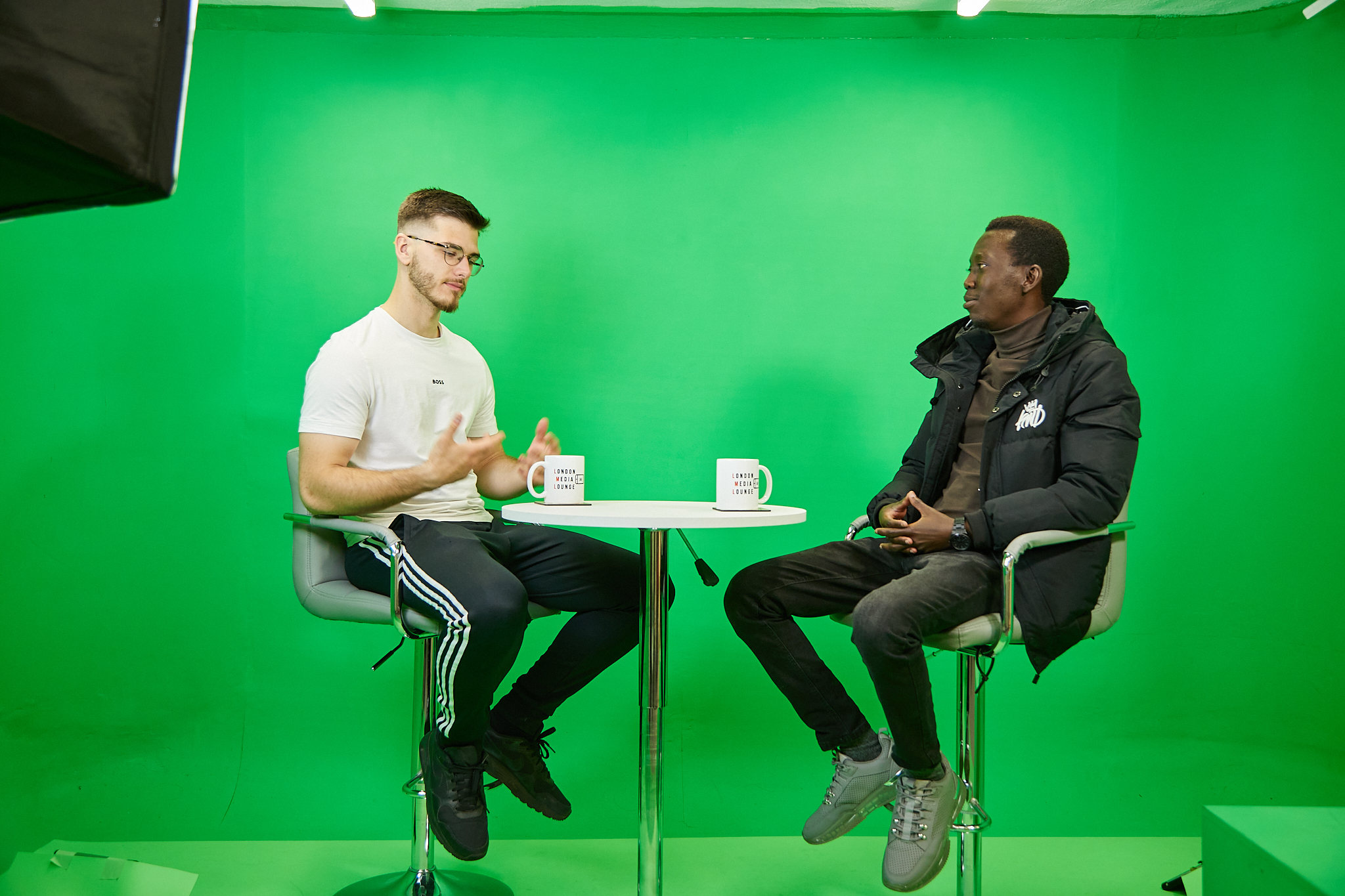
At London Media Lounge, we help creators and brands achieve exactly this balance. Our professional studio environment ensures your videos have broadcast-quality audio, consistent lighting, and clean backgrounds, while you maintain the authentic, relatable delivery style that social media audiences respond to. Whether you are recording podcast clips for social distribution, creating LinkedIn thought leadership content, or producing a batch of Instagram Reels, our facilities ensure every piece of content meets professional standards without sacrificing personality.
Ready to create social media videos that truly perform? Book a session at London Media Lounge and produce a library of platform-optimised content in a single recording day. Professional quality, authentic delivery, maximum impact across every social channel.