
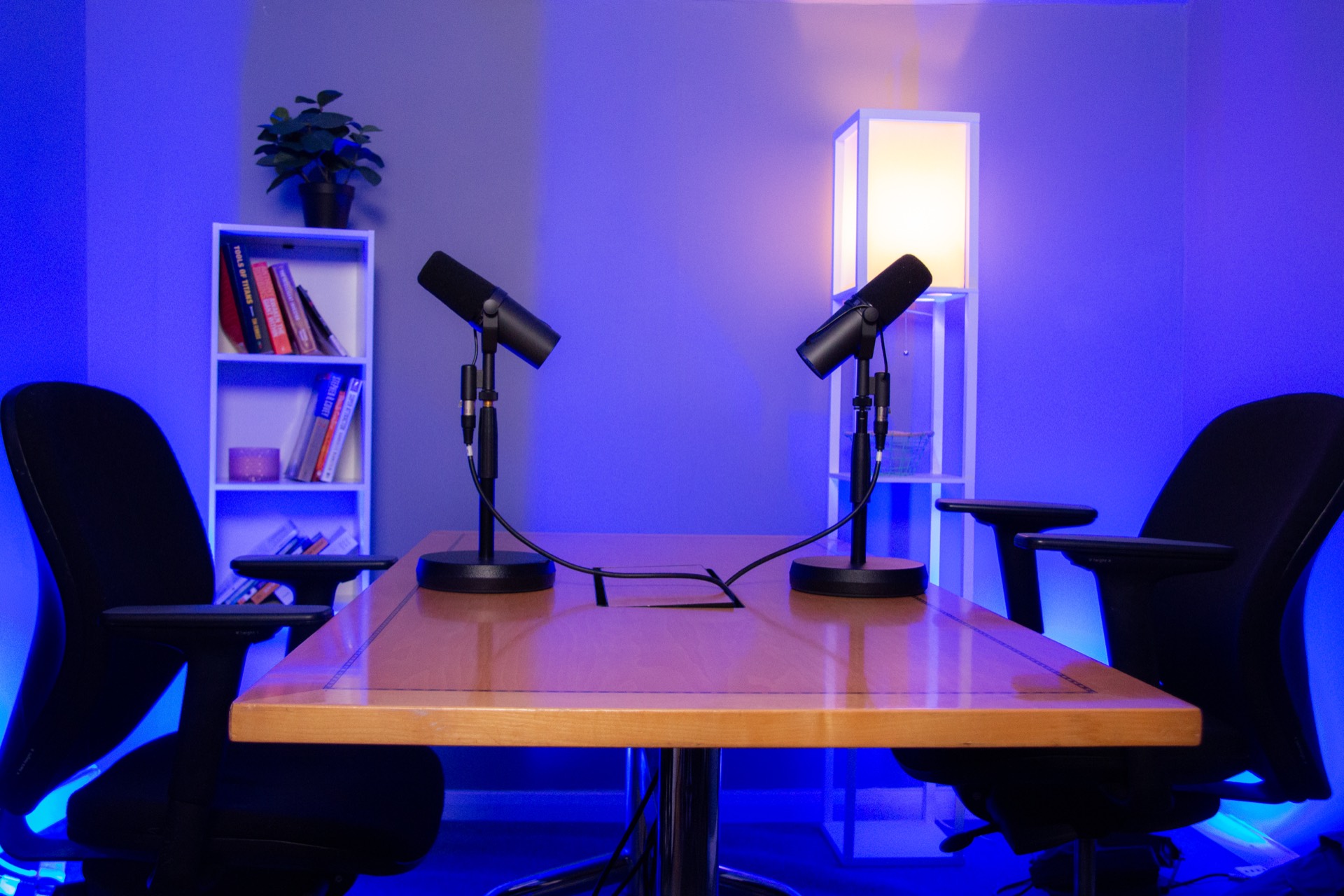
Listeners decide within seconds whether a podcast sounds professional — and poor audio is the number one reason people switch off. The good news is that great sound is not about owning the most expensive gear; it is about technique, environment, and a handful of habits that make an enormous difference. Here are ten practical podcast recording tips that will help your show sound professional every single time.
1. Treat Your Recording Space
Acoustics matter more than equipment. Hard, empty rooms create echo that no microphone can fix. Soft furnishings, carpets, and acoustic panels absorb reflections and produce the warm, intimate sound listeners love. This is exactly why recording in a professionally treated studio instantly elevates your audio.
2. Use the Right Microphone Technique
Position the microphone around 15–20cm from your mouth, slightly off-axis to reduce harsh plosives. Consistency is key — leaning in and out changes your volume and tone. A good engineer will set this up perfectly for you.
3. Use a Pop Filter
Plosive sounds — the bursts of air from "p" and "b" sounds — create distracting pops. A pop filter or windscreen smooths these out and is one of the cheapest ways to sound more professional.
4. Monitor With Headphones
Always wear headphones while recording so you can catch problems in real time — background noise, distortion, or levels that are too hot. Fixing issues during the session is far easier than trying to repair them later.
5. Set Your Levels Correctly
Record at a healthy level that peaks comfortably below distortion, leaving headroom. Audio that is too quiet becomes noisy when boosted; audio that is too loud clips and is unrecoverable. Proper gain staging is fundamental.
6. Silence the Environment
Turn off air conditioning hum, silence phones, close windows to street noise, and warn anyone nearby. The cleanest recordings start with the quietest rooms — another advantage of a soundproofed studio.
7. Record Each Voice on a Separate Track
Whenever possible, capture each speaker on their own track. This gives you full control in editing to balance levels, remove a cough from one person, or fix issues without affecting everyone else.
8. Warm Up and Stay Hydrated
Your voice is your instrument. A few minutes of vocal warm-up and a glass of room-temperature water keep your delivery clear and energetic. Avoid dairy before recording, which can thicken your voice.
9. Edit With a Light Touch
Good editing removes long pauses, distracting filler, and mistakes without making the conversation feel unnatural. Balance levels, apply gentle compression and EQ, and add a consistent intro and outro for a polished finish.
10. Let a Professional Handle the Technology
The single biggest shortcut to professional sound is recording in a studio with an onsite engineer. Instead of worrying about microphones, levels, and acoustics, you simply focus on the conversation while an expert captures it perfectly. At London Media Lounge, an experienced engineer is included with every session — so you sound professional without learning a single technical skill.
Put These Tips Into Practice
Professional sound is the foundation of a podcast that listeners stick with. Master these habits, record in a great environment, and your show will stand out for all the right reasons. Ready to hear the difference a professional studio makes? book your session at London Media Lounge and let us take care of the rest.